Episode Transcript
[00:00:00] Speaker A: What's going on, y'?
[00:00:00] Speaker B: All?
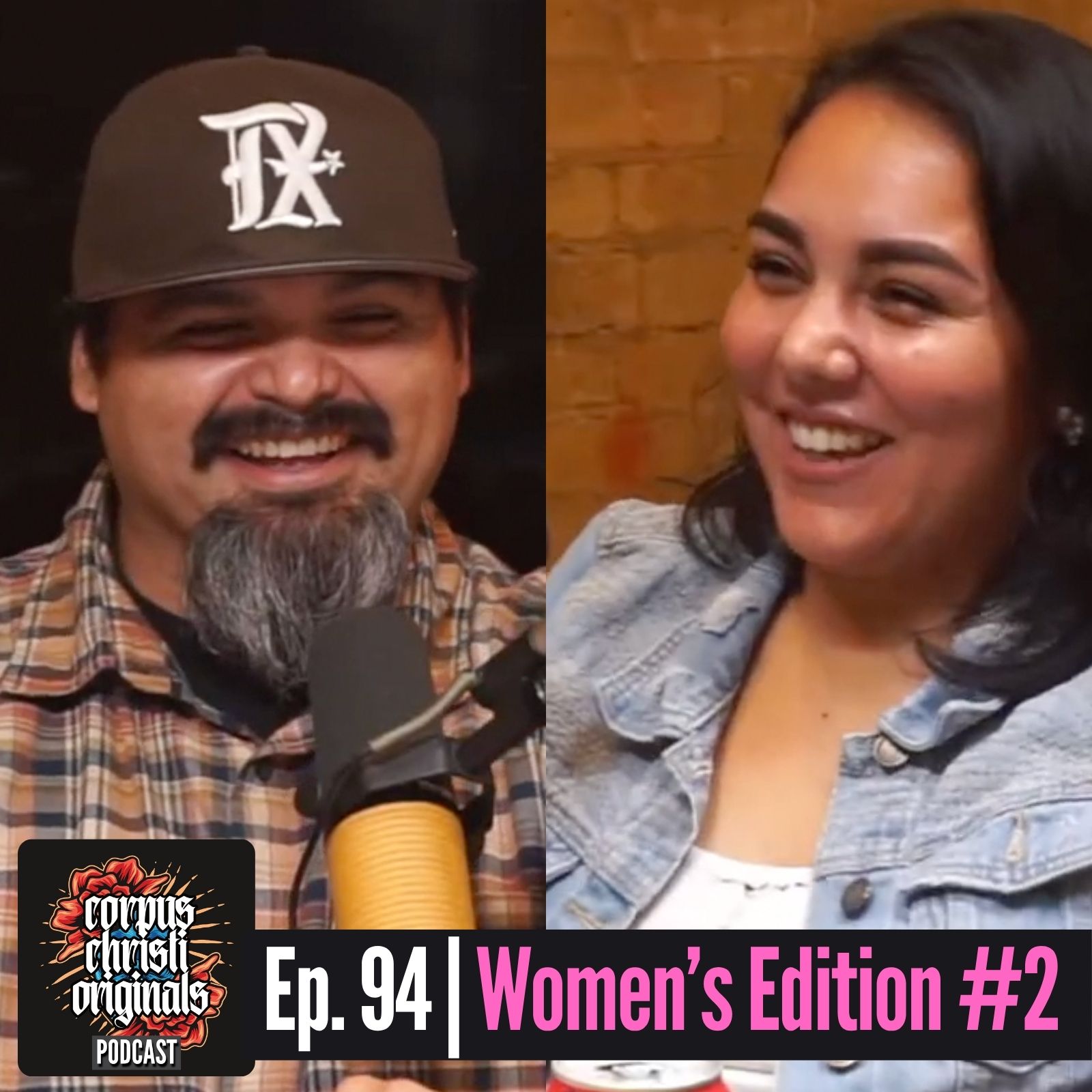
[00:00:00] Speaker A: Welcome back to the Corpse Christian Originals podcast, Women's Edition, episode number two. I'm your host, Jesus Hilario and this is our second episode celebrating the extraordinary women shaping our city or South Texas.
Today's guest, Melanie Sandoval, a full spectrum doula certified doula trainer and founder of Doula Things with Mel and Kindred Hearts, Perinatal and Family Support, a non profit she launched in 2023 while 18 weeks pregnant and dealing with a brain tumor diagnosis.
As a first generation Mexican American woman and single mother of three, Melanie has turned her own traumatic birth experiences and health struggles into a mission, providing bilingual trauma informed care to South Texas families, especially to those who've been left out of the system.
She pays for her own medical care out of pocket and knows what it's like to have access to basic health care, which drives everything she does. Today we're talking about maternal health, men's mental health, immigration, healthcare, access, and building stronger communities for our families.
Melanie, thank you for being here. Part of the Women's edition.
[00:01:05] Speaker B: Thank you. Thank you so much. It's such an honor to be here, you know, just to be given the space and a platform for my voice to be heard and for the message to be heard, you know, because especially in times right now, community means everything because we are, we're getting to some hard spots, you know, and when it comes to services, the government we've seen that will push us to the side, you know, they.
We have to figure out a way to get things in a way that isn't just survival, you know, we need to also be able to thrive, not just be surviving, you know, and it starts from our food, you know, our food, our health care, and even I think the way of living and the style of living recently has changed a lot.
And that community mindset and that community lifestyle has changed and I really feel like it should come back.
[00:02:14] Speaker A: That's very interesting. Yeah. I recently been putting my thoughts on paper regarding this podcast and the direction that it's headed. And community always, it seems to be a huge theme, basically the basic theme around it, because when people tell me, oh, I like what you're doing with your podcast, I don't know, because when I started, like when we were just talking before we started, I started my podcast out of, from, from a brand that I created for hats and T shirts to generate more content. Right. And then started doing that and then I just started noticing people's stories, how much people love the community and stuff like that. So now like it. I have more of a mission now for what this is about. So it's cool that you entered mentioned community.
[00:02:58] Speaker B: Ah, I mean, it's a really big thing. You know, everyone is going through something, you know, whether it be mental health or you're avoiding your mental health problems and drowning them and whatever it may be, you know, because at the end of the day, if we're being real, you can be addicted to any single thing. And that's where mental health comes in, you know, and now there are tools and resources that you can do and it shouldn't be something you should be ashamed about, you know, like for instance, I went through something very hard at the beginning of this year where I had to be committed into the hospital and me. For me to go through something like that, it was earth shattering because I was like, what am I doing? I'm a mom, I'm a business owner. You know, like, the shame hit me so hard and it made me feel so weak.
But when I hit that rock bottom moment, the ones who were giving me the strength and just allowing me and giving me space to just exist and not have to be the doula or have to be Melanie or I could just be and exist and not have to do anything. It was very restorative. And it got me to a point where I thought to myself, we can literally do what we want to do with our time.
If we want to build something that's going to benefit others, we can do that.
And that's where we're at in this political climate, in this, these generations, because nobody's going to save us.
And the only way to create these resources is that we come together as a community and use these tools and resources to amplify voices, to talk about the things that we, we go through as a community. You know, I was born in Aransas, raised in Ingleside, like I said earlier, but I spent the last 10 years in San Antonio and seeing the way that community comes together. For instance, when I found out that I had my brain Tumor, I was 18 weeks pregnant and I was already a well known doula in San Antonio.
So the community completely surrounded me and my family and my partner, well, my ex boyfriend. And so it was beautiful to see everyone come together and literally save me. Because when someone goes through something like that, what are the next steps? You don't know what to do.
And so that's also why my passion for and why kindred hearts exists. Because also like you said, it's like a mission that you, you get from it kindred hearts is. Is here to be able to provide doula support not just for mothers and for birthing people, but also for people who are navigating the medical system, community health workers that are covered by Medicaid. I'm a community health worker now as well. And so I'm really trying to thing to where we can give these services to people and help them navigate the system. Because the system is there to help, but we don't know how to navigate it for sure.
[00:06:23] Speaker A: Yeah, it makes. Yeah, it makes me think about, like, financial, like responsibility in our households and stuff like that, you know? Yeah, it's something that's not taught, but I think it's important to touch on, you know, as far as being responsible with money. So that way you can have access to these instead of depending on the system.
[00:06:46] Speaker B: Yes.
[00:06:46] Speaker A: You know what I'm saying?
And because like you said, they're not gonna come for like.
What did you say?
[00:06:54] Speaker B: You said they're not gonna save us.
[00:06:55] Speaker A: They're not gonna save us. They're not. So we have to save ourselves, survive and then eventually thrive.
[00:07:03] Speaker B: Yes. And it's. It's a system, you know, Like I recently.
Last year in November, actually, it's going to be a year this week.
The last birth that I went to, I actually had a seizure at that birth.
I was practicing with the brain tumor.
I was on seizure medication. I was taking them around the clock. I hadn't had a seizure in over a year. And I decided to take a client. She was a repeat client, so she was like, I don't want anybody. It's fine. I'm here. Like, I know you. It's okay. And I was like, okay. And so I had her sign like a disclosure and everything.
And so I ended up having a seizure in her living room.
And when that happened, I.
I realized that there was also something else next to the brain tumor because they did studies and things. But that was such a pivotal moment for me because I got sick again. I couldn't handle, like, life anymore. I needed. I depended on so many people after having that one seizure.
And so I had to, not just physically, but mentally and emotionally get out of the depression of not being able to function anymore, not being able to be the mom that takes the kids to the zoo and to the dm, you know, all the places.
And I had to rebuild myself from scratch. And so now that I'm at a point where I'm going to the gym four to five times a week, I'm lifting 205 pounds on a deadlift, and I'm hitting PRs, and I'm just like. I actually just made a post. Like, I had you told me that this was going to be me three years from my brain tumor diagnosis.
I would say that you're crazy.
And a lot of people, you know, a lot of people have a lot to say. People are like, oh, she goes out to dance and she's fine. She doesn't have a brain tumor. Or she's working out. She doesn't have a brain tumor. She's fine.
It's come out of people's mouths.
[00:09:14] Speaker A: Oh, my God. Damn. All that on top of all the other.
[00:09:19] Speaker B: Do you really have to learn what to do?
What noise? To listen to.
[00:09:27] Speaker A: Music. To listen to music.
[00:09:28] Speaker B: There you go.
[00:09:33] Speaker A: Wow.
[00:09:34] Speaker B: Yeah, that's right, man.
[00:09:36] Speaker A: That's. That's quite a story. Wow. So, man. So all you go through all that stuff and people wouldn't want to, like, continue. You know what I mean? Some people will just be stuck. I was thinking about this the other day, too. I have a personal podcast, and I was mentioning. You just got to keep going. Right. And that some people just decide, like, they want to not want to continue because of adversity or whatever happens to them because it's. It's not going to stop.
We know that now. It's going to be until basically we die. There's no adversity, you know, whatever your beliefs are. But up until that point, it seems like it's always going to be there. And so people just, like, give up.
Yeah. You know, and it's cool that you. You're able to create things even though you have, you know, the tumor and you have kids and you're single and you got like. You're like. Like the Persona of Latina strength, you know what I'm saying?
[00:10:34] Speaker B: This is why I wore the jean jacket with.
With the sandals and not the Selena vibe.
[00:10:41] Speaker A: Yeah. Yeah. Your first gen. You said you. You mentioned your first generation.
[00:10:45] Speaker B: Yeah. So my mother was brought here because my grandfather came in the. In the time where they were handing out Social Security cards at the border.
[00:10:56] Speaker A: Oh, wow.
[00:10:57] Speaker B: I think it's because they were. They were doing, like, a reform to get workers, and my grandpa. They came in legally.
They're all residents now. Don't come for my family, y'.
[00:11:08] Speaker A: All.
[00:11:11] Speaker B: But, yeah, so she.
She. I was made in Mexico and born here.
[00:11:16] Speaker A: Yeah.
[00:11:17] Speaker B: So, yeah, they were here. And we actually were a family that worked at the Ingleside Tortilla Factory. Twin pizza.
There was so many different little spots there in Ingleside. That. That we.
That we were a part of. And my grandmother actually was the first in our. No, actually, my.
My sister and my grandmother. So my sister lives with one lung. One functioning lung. Yeah. When she. I don't know if there's some sort of correlation, which I'll probably talk about, because. Why not?
[00:11:51] Speaker A: Yeah.
[00:11:51] Speaker B: Because of the water, because of Corpus, because of the. All of the things. But she had a tumor. I don't know what type of tumor it was, but because I was 6 years old, she was 4, and she had a tumor that grew in her lung, and she just stopped breathing.
And they had to remove the tumor, but then it came back three months later, and so they had to remove her entire lung. So she lives with one lung and has since she was 4.
And so she played soccer. And so anytime that it gets hard for me, I think of my sister.
[00:12:23] Speaker A: Wow.
[00:12:24] Speaker B: Yes.
I'm like, she. Excuse my friend. She's a bad binge.
[00:12:30] Speaker A: Sure.
[00:12:31] Speaker B: Because she's doing it on 50% oxygen.
[00:12:35] Speaker A: So.
[00:12:36] Speaker B: But yeah. So.
And then my grandmother also has cancer, and she's had cancer for a very long time. I've helped navigate the system and all that with her and translating, you know, because they only know Spanish. Spanish, and so being here in the United States actually gave them the privilege of being able to be seen by the world's best oncologists and all of the things. My sister was seen at Driscoll Children's Hospital.
My grandmother is MD Anderson in Houston, and she's. She's worked. She worked at. As a janitor in a school in Ingleside, and she had insurance. And, you know, there was things that were privileges because they were able to come here.
And so I think that people see immigration and they see, oh, it's so easy to get, like, status. It's not.
My. My grandparents, my parents have been here since I was born. I'm 29 years old.
My mother just got her green card.
[00:13:43] Speaker A: Wow.
[00:13:44] Speaker B: Six years ago.
And she couldn't go back to Mexico.
My father, he also couldn't go back to Mexico because as soon as you go, you can't come back.
And he. His parents both passed away in Mexico with him here because he had a family to provide for.
So those are the things that people don't talk about. Those are the things that people like when we're talking about immigration, when we're talking about mental health, you know, especially men's mental health, you know, like, yes, women's mental health and all the things. But also when you're talking about the family unit which has been completely destroyed in this generation.
We, we miss out on speaking on the man as well.
And the man doesn't know how to articulate what they're feeling because the previous generation said, no, you're a man, you don't cry.
[00:14:45] Speaker A: Right?
[00:14:46] Speaker B: Boys don't cry. And so now they can't. They see it as a weakness and they think that they're not emotional, but the only emotion they know how to feel is anger.
[00:14:56] Speaker A: Yeah, I can definitely relate to that. Yeah, I've been married 13 plus years, man. I did not know how to communicate at all.
That on top of being ADD adhd, you know, bottling up all those thoughts for years and just like being taught to like work at, work hard at what you do, you know, and don't pick your head up unless you, you're, you're going to a different task or something, you know, so definitely can relate to that, man. So it's interesting that you bring up mental, men's mental health and all the stuff that you're doing, you know, So I guess so.
Why do you think? Well, another thing you mentioned too is the family unit that it's basically destroyed with this generation.
What are your thoughts on, on those, on those. For further.
[00:15:48] Speaker B: So I think that when you look at the history of America, you know, the public school system was built.
[00:15:59] Speaker A: Back.
[00:15:59] Speaker B: With the Industrial revolution and it was teaching people how to work and the working hours and it was like a factory to just create working bodies. You know, the public school system has now changed, but it still hasn't really changed. You know, they're, they're teaching us the basic things that we need, but they aren't teaching the social, emotional well being of the children.
For instance, I had my girls in San Antonio in a school called Act On Academy, which they actually just opened one here in Corpus, which was amazing to see. I was so excited.
But their way of teaching is they use like a buck or a bee buck system.
[00:16:49] Speaker A: Okay.
[00:16:50] Speaker B: So each kid has a task that they have to do, a responsibility. If they don't do that task and somebody catches that they don't do that task, that person can then go, give me a B book. You didn't do your task.
And so that's kind of how. And at the end of the week they're able to buy from a little thing that it's like a dollar tree little thing. So they, they learn responsibility and commune and holding each other accountable and working together as a community.
And my oldest has autism and she knows that she has autism and she knows that she is different and she feels that people treat her differently.
And so it was really important for me to find something like that with my kids because I wanted to build that sense of community. You know, that sense of community starts with if you see trash on the floor, pick it up.
If you see that somebody is missing or that they lost, they dropped a hundred dollars, call them, tell them hey, you just dropped a hundred dollars. You know, and that's kind of where that starts.
I think I got way off topic. I'm sorry.
[00:17:57] Speaker A: Definitely community. Community is huge. And it's interesting that you mentioned, mentioned the industrial I guess, revolution. Oh yeah, yeah, yeah. Like just working bodies and kids going to school, parents going to work. The kids are at school eight hours, ten, ten hours a day. You know, you really don't have a lot of time to speak into your kids life.
Homeschool. My daughter's homeschooled.
She's, she's, I think she's add kind of like me and my son is a little on, on the autistic spectrum.
And kids, the schools learn to, not the school system but the community is brutal against those kids, you know what I mean? Because they're, they're not the normal working person that they want them to be there. They don't fit the mold, you know what I mean? And definitely relate to that. So yeah, you mentioned that about the family unit.
[00:18:52] Speaker B: Yeah. And for men, the response, especially now with finances, you know, the, the load that they carry where they have to physically work, especially down here in South Texas, you know, most are working blue collared working men. You know, my exes, my ex husband is a master plumber and my ex boyfriend is a crane operator. And so both of them, I had to hold down the house 24 7.
[00:19:22] Speaker A: Wow.
[00:19:23] Speaker B: So they never, they never got to come home. I mean with me. Yes. Like they would get to come home and I would be like, let's talk about it. You know, like let's, let's figure out how to move forward.
But because men aren't taught to talk about their feelings, sometimes they feel attacked or they only know how to feel angry and they don't know how to communicate what they're feeling. And so now that I'm raising a son, my entire perspective has changed.
And I see my ex partners and I see how I could have been better as a partner because I'm not perfect and I'm a Latina.
We're spicy.
But I think that understanding that it comes from a place where it's the way that we're raised.
It's not just what religion or what this, what. It's not that. It's how you treat your neighbor.
It's how you're. For instance, like me ever. I've always been this way. I'll see somebody in their little. The wheelchair at the cart. I mean, at the car, coming up to their car. I'll load their groceries up and then I'll go put the cart up and help them into their car because I know what it's like. My own grandmother goes through these things. So I think it's important to also talk about that. Men's mental health. I also watched my grandfather. He was the provider for our entire family, and he was once bit by a rattlesnake and they had to amputate his toe.
[00:20:58] Speaker A: Oh, shoot.
[00:20:59] Speaker B: That hurts a man's ego. When you have to sit on your butt for a really long time. When you're used to waking up at five in the morning going and doing this and that and, you know, it's that. That urgency to provide and the responsibility and it can be really hard. And the suicide rate for men is actually very high because of that, because it gets so heavy that they can't carry it anymore.
[00:21:24] Speaker A: Oh, wow.
Yeah, I had crayon Martin the last podcast.
Well, his. His leg got messed up in. In on the job.
And so he. He was like on the verge of tears, like, just thinking about it, because he was saying. Thinking like, how am I going to provide for my family now?
So he had a whole stint where he was basically grieving over that. And it's real, you know, it's. It is a real thing for, for men as well as women. Like, we both have our. Our share of difficulties, you know, and it's. It's almost like you have to want to stay together, you know, or want the. The marriage to work or want to stay with your partner for a long time, you know, and we mentioned that too, that it's. It's rare nowadays. The trouble is finding a, you know, finding somebody that you want to spend the rest of your life with teaching my daughter, my son how.
How to look for a spouse, should that point come in time, you know, and one of the ways is for. For me being an example, which is, I think is one of the main ways that kids learn is their parents being the example and how. That's how they actually learn. Instead of just telling them, you know, you have to, like, show them how to do it.
[00:22:42] Speaker B: They watch everything.
[00:22:43] Speaker A: Everything. They watch how you. Because I'm teaching my daughter how to.
I teach you where money comes from. Comes from work.
[00:22:51] Speaker B: Does it?
[00:22:51] Speaker A: I mean, because like, I guess when growing up, like some families are, they give their kids money because they think.
[00:22:57] Speaker B: An allowance or something.
[00:22:58] Speaker A: An allowance. Or they feel like it's their duty. Like I have to give them money for college or I have to give them money for this. Oh, they're asking me for money. I have to. Yeah. I mean, it's your responsibility to clothe them, you know, give them a roof, give them food, stuff like that. But when, when they're, when they leave the house, what are they going to think of that money comes from? Well, it comes from mom and dad. Mom and Dad, I need some more money. Mom and daddy need some more money. If you show them, you clean your room, you get five bucks.
You don't clean your room, you don't get five bucks. Basic stuff. Instead of allowing them.
[00:23:29] Speaker B: Yeah, that's a responsibility.
[00:23:31] Speaker A: Responsibility.
[00:23:31] Speaker B: Yeah. There are things that are.
Yeah, that's exactly how I parent my kids too.
You can't just hand out money. It doesn't grow on trees.
[00:23:40] Speaker A: Yeah, I mean, I, I like to give them stuff.
[00:23:42] Speaker B: I mean. Yeah, but did you earn it?
[00:23:45] Speaker A: Yeah.
[00:23:45] Speaker B: Have you given me attitude?
Because I want to give you attitude.
[00:23:49] Speaker A: All the time, man. So let me see. 24.
So you launched Kindred Hearts. What. What is that? So what is that?
[00:24:02] Speaker B: Yeah. So Kindred Hearts is a non profit and right now I am fiscally sponsored by Moms in Motion, the Moms in Motion project.
I'm a host with her. So what I do is every Wednesdays and Thursdays I. We meet at Cole park. And me and all of the moms who want, even if you're not a mom, you are just want to come out.
Women coming out and walking, we walk two miles. We all have our strollers. I have my kid with me, so a lot of the times I'll be with him, but most of the time I'm helping with other moms with their kids. Or like, we kind of just like.
[00:24:44] Speaker A: A little community, like a network. It's pretty cool.
[00:24:46] Speaker B: Yeah. And some people have businesses, some are stay at home moms, some are on their own personal health journeys.
[00:24:54] Speaker A: Yeah.
[00:24:54] Speaker B: And so it's really cool to, to have built this little community of women who are all different in all kinds of ways, but we have one thing in common, and it's motherhood or womanhood.
[00:25:07] Speaker A: Right, right.
[00:25:08] Speaker B: And so having that safe split, that safe space where everyone is welcome, you know, like we, I'm very big Especially with Kindred Hearts and including all communities. So bipoc, lgbtq, IA plus, and I, coming from an indigenous descent, from a bloodline of indigenous descent, it's really important to also incorporate all of those things. And so I. I named it Kindred Hearts because I feel like the work that I do is heart work.
It's heart work because people are welcoming me into their life and trusting me with this information and allowing me to guide them through that experience.
And I always say I want everyone's experience with me to be the best experience that they could have, you know, but there are times, like, for instance, when I was getting sick, there were times that things happen and.
And sometimes we have to hold ourselves accountable and do the growth to then hit the next level, you know?
So, yeah, Kindred Hearts, what it does is it provides doula trainings. So I am a doula trainer with Kappa International, which is a big doula training agency. They're very well known and they're about 30 years old.
And so I'm a bilingual teacher. So I teach doulas in both English and in Spanish.
So that is where I want to be able to offer scholarships for bipoc people who want to become doulas.
[00:26:50] Speaker A: What's bipoc?
[00:26:51] Speaker B: Bipoc is black, indigenous, or people of color.
[00:26:55] Speaker A: Okay, okay.
[00:26:57] Speaker B: And so the. The communities have always been excluded, you know, because we're different. It's almost like how you describe, like the ADD and the adhd. It's like they treat us different because of a different culture or our skin tone, you know, and so it's still very prevalent. I've seen it even in the hospitals when I'm supporting a client.
[00:27:16] Speaker A: Interesting.
[00:27:17] Speaker B: So Kindred Hearts offers scholarships for doula trainings, also free doula services.
Eventually, I want to be able to serve the entire state of Texas, but right now my mission is South Texas, so San Antonio, down to the Valley.
And I want to be able to help where it needs help. So there's a lot of teenage pregnancies down here.
There's 13, 14, 15, 16 year olds having babies, babies having babies.
Teenagers are one of my missions as well.
Having a doula for them is detrimental to not just their childhood. They're having a baby, but that is part of their childhood.
And so a doula is someone who is trained, and some are certified, some aren't, but they're trained to navigate the birth process.
So, for instance, we are educated in the anatomy, the physiology.
We also teach, some of us, like, only home births, some like only birth center births. And some do all of them. I love doing hospital births. Hospital birds are my favorite.
Yeah. It's. I think it's because I'm able to bridge the gap between the OB and the provide and the. The patient.
Because most of the time, OBs are like, oh, my God, they have a doula. And they think that, like, I'm gonna come for them or something, but I'm not. I'm really just there to help the communication, you know, and so informed decision making. We teach all of those things.
[00:29:02] Speaker A: Yeah.
[00:29:03] Speaker B: And then we. We guide through the process. But not just the person who's giving birth, the mom, we're also supporting the partner. And that's where my passion for men's mental health and all of that happened. I've literally had six foot five, giant gladiator man that had three world tours in Afghanistan.
[00:29:22] Speaker A: Oh, wow.
[00:29:23] Speaker B: Crying in my shoulder because he couldn't do anything while his wife was going through an emergency.
[00:29:30] Speaker A: Oh.
[00:29:31] Speaker B: And nobody could support her but the staff people there, the people that were there.
So, you know, like, when you're a doula, you see the sides of people that not even they have seen.
And that's why I became a trauma informed care provider.
[00:29:48] Speaker A: Whoa. Trauma informed care provider.
Can you talk about that a little bit more?
[00:29:53] Speaker B: Yeah. So as a trauma informed care provider, I understand, and I was trained to understand the way that trauma happens and the way that it's stored in the body.
I have witnessed over 200 births.
[00:30:11] Speaker A: Wow.
[00:30:11] Speaker B: And in every single one of those births, those people were going through a transformation within themselves. And either they were releasing, reliving, or just completely going through trauma.
So, for instance, I'll talk about a client.
[00:30:33] Speaker A: She.
[00:30:34] Speaker B: I. I was the backup doula for her. The previous doula was already with her for 24 hours.
She was delivering at a birth center.
But because she was so exhausted and maternal exhaustion is one of the biggest reasons why women transfer from a home birth or birth center. Birth, which is out of the hospital to the hospital, because they get really excited about labor and birth and all these things instead of, like, really just taking their time and not getting too excited. But it's inevitable.
[00:31:06] Speaker A: Wow.
[00:31:07] Speaker B: So she. I ended up coming in and she. We were going to transfer to the hospital. We had the conversation and we got to the hospital and she said, I don't want a male ob.
I was like, okay.
That gave me one indication of like, okay, she might be a survivor. Survivor of rape, sexual assault, abuse, physical abuse, emotional, whatever it may be. I never pry because obviously I was the backup. Doula So I didn't have a rapport with this client.
So we ended up getting into the room and I cleared the room and I asked her and I, because of the way that she was so sheltered and she was covered, she didn't want anybody to look at her. It was very obvious that something was happening. And so I asked her, I was like, are you a survivor of sexual assault?
And she just started crying and she told me yes.
And as a doula, I know that an epidural sometimes can be trauma informed care because when a person survives rape, that stays with them.
When a person is having their cervix checked with the doctor's fingers, it can be a very similar feeling. Oh, so it can bring back those feelings. And because birth is such a, an innate experience, it can. Our brain will shut down and we'll. We're not safe. We're not doing this. We can't. The baby's not coming out.
[00:32:47] Speaker A: Wow.
[00:32:48] Speaker B: Yes.
So an epidural, what it does is it numbs the nerves from the waist down and allows the body to open.
So that's why sometimes I feel like an epidural is trauma informed care.
[00:33:04] Speaker A: That's so crazy.
[00:33:05] Speaker B: So we actually recommended an epidural to her and she had a baby four hours later.
Yeah.
So. And, and these are the experiences that I've gone through and that have really given me the knowledge to understand the way that the human body works, the way that trauma work.
And I can see how the family unit has just been completely shattered and, and it has to do a lot with men's mental health. You know, like for instance, both of my ex partners, their dads weren't present in their life because they were part of that industrial revolution because they had to work so much and they were parented or their moms were single moms, you know, so, so yes.
[00:33:50] Speaker A: So you're talking. So you're touching on mental health again, which is cool. It's fine.
[00:33:53] Speaker B: Yeah.
[00:33:54] Speaker A: Yeah. So I guess I, I want to dig into that more. Like what's the. I mean, and then you mentioned that the, that the family system is messed up.
[00:34:05] Speaker B: Yeah.
[00:34:05] Speaker A: So can you explain a little bit more?
[00:34:07] Speaker B: Yeah.
[00:34:08] Speaker A: Talk a little bit more about that.
[00:34:09] Speaker B: I think that people really need to understand that when it comes to having children, you really like, it's not just like, let's get pregnant.
[00:34:18] Speaker A: Right.
[00:34:19] Speaker B: You have to do your research. Like there's actually. It's at the tip of your fingers. There's literal research that shows you what ways you can parent a child in the way that they will thrive.
And that correlates with the social, emotional well being of the child with trauma. If a child is living in an environment where it's chaos all the time and people are constantly changing and they're not going to thrive.
And so there are some times where it's inevitable. For instance, I guilt myself all the time because I'm like, I could have just stayed quiet.
I could have just stayed, you know.
[00:35:01] Speaker A: Yeah.
[00:35:02] Speaker B: But I have so much peace now.
And so that's. I think people need to understand that you make those choices, you choose who you want in your life and you choose the life that you want to live.
And that goes into the parenting. You know, when you're parenting, it's a sacrifice for both. Not just for mom, it's both. Like, dad also has to start getting the mentality right of like, you're not going to be going to host locals anymore. You're not gonna be having your bachelor pad, you're not going to be going out with friends, like, yeah, once a month, but making sure that your wife or your partner is taken care of or that she's also getting a break when you're getting a break, you know, so it's like, it's that dynamic that needs to be found and it's not there. And I feel like a lot of men have this new culture of.
I don't know if it's because of the whole Andrew Tate thing. I don't know if you ever saw Andrew Tate.
[00:36:04] Speaker A: Yeah, for sure, for sure. Yeah, yeah, yeah.
[00:36:06] Speaker B: Where they see us as like disposable or, you know, when it's like, I'm a human too, I also carry the same value and the same worth. We just have different responsibilities in society.
[00:36:18] Speaker A: Yeah, for sure.
[00:36:19] Speaker B: You know?
[00:36:19] Speaker A: Yeah, yeah, no, for sure. Like, I think I want to bring up too, like, even, even, like pornography.
[00:36:25] Speaker B: Yeah, it's desensitized.
[00:36:28] Speaker A: Definitely, definitely. Like, I was victim to it, you know, when I was younger. And I think that that had my mind to think that women are objects.
Objects.
[00:36:42] Speaker B: They're sexualized.
[00:36:43] Speaker A: Yes. And so. And I think that music culture talks about women that way, so that's how they're gonna get treated.
It isn't until you change that mindset, you realize that there's an actual person here that is a woman different from a man. Not to step on anybody's toes or whatever.
[00:37:02] Speaker B: Oh, no.
[00:37:03] Speaker A: Stuff goes. But there's a difference, you know, in between the two. And it isn't until you realize that then you can actually move forward and Go forward, because otherwise you're just going to keep treating them like that, you know? And I definitely think that marriage is. Is another step, a level up from singlehood, because you'd be single for so long, and then eventually it's like the natural progression is to have a partner with you, have kids. You know what I mean? So for me, it's like, that's the next level. Marriages is the next level in.
In a man's.
[00:37:38] Speaker B: Yes.
[00:37:38] Speaker A: From a man's perspective, because like you said, no more go. You know, you have responsibilities now. You've got a person that you're sharing a life with, and you have two kids. You know, I have two kids that I'm responsible for along, you know, together with my spouse.
It's like, if people. If we could grasp that as a society, society would be a lot better.
[00:38:00] Speaker B: Oh, yeah, 1,000. But now we've gotten to a place where society has built this fear around getting into a relationship with someone just because of, like, the instability of one person or another or mental health. You know, like, they're like, oh, well, for instance, with me, I'm very transparent with my entire situation because I don't want anybody popping up into my inbox thinking that they can handle everything when they really can't.
So.
But it's. It's honestly, like, people make the choice. You make the choice of what you want to put up with. At the end of the day, you make the choice of what you want to go through, what you want to put up with. And people now, they're like, I'd rather be single, you know, and that's kind of where I'm at right now.
[00:38:46] Speaker A: Yeah.
[00:38:47] Speaker B: You know, like, I've been dating here and there, but it's like, it's a. It's almost like a waste of time because you get ghosted or, you know, like, there's no more respect.
[00:38:57] Speaker A: So crazy. Yeah, it's like. Because, like. Like I look like sometimes I listen to, like, those. That whole man culture and like, on YouTube and stuff. It's like, what do they. They say? Like, different things. They have different terms and stuff like that. And I don't know, but definitely, I think that plays a part into it, too. Like you mentioned earlier about Andrew Tate and all that stuff, especially the young boy, the young teenagers.
They. I mean, wow. It's just.
You have to find. I think you have to find that.
Find faith. You know what I mean? Find. Have faith in. In.
In. In what humanity is. You know what I mean? You could. And there's. There's a bunch of different arguments on that as well, you know. So I think that has a lot to do with it as well.
[00:39:40] Speaker B: Yeah. But I think that it's up to us to understand that as humans we are all allowed to exist in our, in our own self.
Regardless if my beliefs are different than your beliefs. But then there comes a times where, where those beliefs start impacting entire community.
[00:40:03] Speaker A: Yeah.
[00:40:04] Speaker B: Like how we're experiencing now.
[00:40:07] Speaker A: Like explain like going more.
[00:40:08] Speaker B: Yeah, I've watched. So I have, I have a lot of friends who are activists from all over the country. You know, I have people in New York and Los Angeles, like, and they post videos of the protests where they are.
And these are people that I know.
[00:40:23] Speaker A: Yeah.
[00:40:26] Speaker B: They have posted videos of ICE agents ramming doors down with children in the home and arresting people because they have an illegal status.
And is it like first of all, the argument is anyone illegal on stolen land?
First of all. Second of all, there, there should be. They should be doing that in a kind way to get them their green cards. They're. They're making this claim that they are.
They're only going for the, the drug dealers and the rapists and all. They're not.
They are not. They're going for the welders. They're going for the blue collar workers that are out here building Cheniere and building Vostel Pine and building all of the things here in the har.
Even people who are building the houses, you know, like they're literally arresting them. Even people who don't have, who do have green cards.
And it's really stressful for me to.
And I speak about it because it's stressful for me.
My ex husband has daca and DACA is a legal status and you renew every two years and you have certain qualifications or you have certain requirements in order to qualify.
And he qualified with all of them because he graduated from here. He, he's been here since he was 10 years old.
And so he's here legally. But if at any point in time he gets arrested and he has my girls with him, which he takes every weekend with him.
Where do my kids go?
[00:42:10] Speaker A: Wow.
[00:42:14] Speaker B: And I don't think that like this is just a situation. I'm an American citizen because I was born here, but I don't. I think people are so far detached from situations like this that they can turn a blind eye.
And us. That it's happening to us and it's. We're living the actual fear. It almost brings back. I don't know if you remember like in O5 where they had. In the Aransas Walmart, I remember they had, they're called retinus blockage, I think. I don't know where, where they were stopping everyone and asking for their okay, their status. And I remember that my, my parents were so scared to leave the house, you know, and it was like, what, what do we do? You know? And I remember those, those feelings of fear and those children are going through that now and this trauma is happening again to another generation.
[00:43:11] Speaker A: Yeah, yeah. So.
So I guess since like the, these recent events have been happening, were you, were you like, I guess, passionate? I, I assume you're a bit passionate about it, but, like, were your thoughts like that before all this stuff started happening? You know what I mean?
[00:43:28] Speaker B: Oh, yeah. I feel like I've always been an activist.
[00:43:30] Speaker A: Okay. Okay.
[00:43:31] Speaker B: All right. Yeah. I think I always tell my friends, know this. I always am like, I love making people feel uncomfortable, but I mean, I'm just, just, I'm just real, you know, and we really can't care what people.
[00:43:47] Speaker A: Yeah, for sure.
[00:43:48] Speaker B: Have to say or think.
Imagine if I cared. I wouldn't, I wouldn't be sitting here right now.
[00:43:54] Speaker A: Sure. Like, and we can get so caught up in like what our family thinks and how we were raised.
Like if, say you had like a, like I researched like narcissism and stuff like that.
[00:44:05] Speaker B: Right.
[00:44:05] Speaker A: So if you have a narcissist, somebody that you live with, like a mother or a father, all you did was wanting what they did.
So when you're. You leave the house or you grow up and want to have your own stuff, it's difficult because you've had so many years of being, I guess, trapped, you could say, in that mentality. So having to break it is, is huge. What's up, monty? Monty on YouTube, Facebook. Thanks for joining.
Yeah, definitely. So just break breaking that mold. And like, even I think that's huge for society also for people to have their own thoughts and their own.
Be able to set boundaries.
[00:44:41] Speaker B: Yes. And that's the biggest thing. I think that people get upset when we set boundaries.
[00:44:45] Speaker A: Yeah.
[00:44:46] Speaker B: But people are entitled to have and feel their own feelings. Of course you're not going to be hurting people because you don't like something.
[00:44:54] Speaker A: For sure. Yeah. And it's just so constraining when people, when people do that to you and you see it in the workplace and it's just bad for society all together. And then social media comes, plays a part to all that and people can just say whatever they want, not even be in Front of you, you know?
[00:45:12] Speaker B: I know.
I. That was one of the things that recently irked me because there was someone that was very close to me who was claiming that I made up the brain tumor and the cancer and actually, like, blasted it all over.
[00:45:28] Speaker A: Oh.
[00:45:29] Speaker B: In a community on social media.
[00:45:30] Speaker A: Wow. Crazy.
[00:45:32] Speaker B: So it was really. Yeah.
[00:45:34] Speaker A: How did it make you feel?
[00:45:35] Speaker B: I mean, I was really hurt. I was really hurt because I was like, damn, I trusted my intuition with this one.
But it just reminded me of the work that I still had to do within myself. And then at the same time, I was like, why?
How do you have so much time?
But it's like I was genuinely going through something really, really hard. And then this is what you have to say.
Yeah.
But that's all I have to say on that.
[00:46:07] Speaker A: I had. I had a community member on Facebook.
I think her name is Shay or Shy. I don't know. Sorry if I'm pronouncing that wrong.
She had a question for you.
[00:46:16] Speaker B: Yeah.
[00:46:17] Speaker A: Regarding.
And she was. And she was like, oh, yeah, that was. That's an awesome person to have on. So she. I don't know. You might know her. Shay Davenport or Shy Davenport.
[00:46:26] Speaker B: Oh, is she with Wild Waves?
[00:46:29] Speaker A: I have no idea. She's got. I think she has, like, red hair.
She does art. She makes, like, paintings and, like, little earrings and stuff like that.
Yeah.
What did she say?
It was about the PPD or PPA or something like that.
[00:46:45] Speaker B: Postpartum mood disorders.
[00:46:46] Speaker A: Yes, yes, yes, yes.
[00:46:48] Speaker B: Yeah. So I'm actually a survivor.
[00:46:50] Speaker A: Okay.
[00:46:51] Speaker B: With my first.
So the reason why I became a doula was because with my first baby, I didn't know anything.
[00:47:02] Speaker A: Yeah.
[00:47:02] Speaker B: We had gotten pregnant, and then we're like, okay, well, you go see the OB that your insurance gives you, and then you go to every appointment, and then once your contraction starts, you go to the hospital.
So I ended up going to the hospital, and they were like, oh, you're four centimeters dilated. You can have your baby. And I was like, okay. So I ended up going in, and then they hooked me up to all kinds of things.
And three days later, and extremely traumatic birth.
I had my baby.
But.
Excuse me. The birth that I had had triggered my experience when I was raped.
[00:47:47] Speaker A: Oh, wow.
[00:47:49] Speaker B: And it was triggered because the OB. So the OBs are not supposed to pull on the. On the placenta for it to detach it on its own naturally. And there's a way for the body to let somebody know, hey, it's. It's done. And it's gentle traction that they do not like pulling on it.
[00:48:06] Speaker A: Right.
[00:48:07] Speaker B: My OB pulled on it and it ruptured inside of me. So he had to manually extract the placenta.
[00:48:13] Speaker A: Oh, yes.
[00:48:15] Speaker B: In front of my ex husband, which was like, the most traumatic experience of my life, going through that and watching it happen.
So I didn't know that I had postpartum psychosis until I became a doula because of the education that it brought up.
[00:48:30] Speaker A: Yeah. Wow.
[00:48:31] Speaker B: So I would get the thoughts of, like, wanting to shake my baby.
[00:48:35] Speaker A: Crazy.
[00:48:36] Speaker B: I'm wanting to put a pillow on her face so she would stop crying.
And they were intrusive thoughts. And those are the thoughts that people don't think about, they don't talk about because it's like, oh, you're a bad mother for having these thoughts. And how could you think that about your baby? The news articles where they. Where the mother kills their baby, and that's what that is. It's undiagnosed.
[00:48:56] Speaker A: Oh, crazy.
[00:48:57] Speaker B: Postpartum psychosis.
[00:48:59] Speaker A: Wow.
[00:49:00] Speaker B: And postpartum depression and postpartum anxiety can also be a thing where you literally cannot leave your baby out of your sight, even to a point where you're, like, checking if they're breathing.
[00:49:12] Speaker A: Yeah.
[00:49:13] Speaker B: Like, it's normal to do that every once in a while. But when you're fixated that those are signs of having postpartum also. Postpartum rage.
[00:49:21] Speaker A: Wow.
[00:49:21] Speaker B: You know, we have an attitude when we have postpartum because. Yeah. It's exhausting to be.
[00:49:26] Speaker A: Yeah. Would you say that women, like, forget about taking care of themselves?
Yeah.
[00:49:31] Speaker B: Because. Because of the postpartum mood disorders. But I also think that people don't understand what it's like to be freshly postpartum because they don't physically go through it versus someone who actually has already gone through the. Giving birth. The process of giving birth. And postpartum, we can only have empathy. And most people don't have empathy. They have sympathy. It's like, oh, I feel bad for you. I'm sorry. But there's people that are, like, empathet, and they sit with you and they're. They're more present for you. Holding space.
And they're.
For instance, you can tell because as a society, when a mother gives birth, immediately they want to go see her and the baby and they want her to, like, put her makeup on and, like, get all ready. Not knowing, not understanding that she's literally leaking out of everything.
[00:50:23] Speaker A: Right, right, right.
[00:50:24] Speaker B: And in pain. Yes. And then the hormone fluctuation and just some. I actually encourage my clients to at least wait Two weeks before having anybody over.
And even for labor, just have your list of people who you're going to tell you're in labor. But even then, try to time it, because then you're going to get the questions. Are you still in labor?
[00:50:45] Speaker A: Yeah.
[00:50:45] Speaker B: And you know, that can mess with your mind.
And it's. It's a very delicate phase. Yeah. And we actually call it it the fourth trimester, because there's three trimesters in pregnancy, and then the fourth trimester is the last three months, which are the first three months of the baby's life.
Yeah. So it's a huge transformation. And in different cultures, like.
Like, for instance, in my culture, they do the quarantine. I'm Mexican.
You cover your ears. But I cannot.
[00:51:21] Speaker A: What is it?
[00:51:22] Speaker B: Quarantena, which is 40 days.
[00:51:24] Speaker A: Okay, okay, okay.
[00:51:25] Speaker B: Yeah, 40 days as a doula, I always say five days in the bed, five days around the bed, and five days in the room.
So you're pretty isolated and surrounded by warmth. And that's the best healing practice that. That we do in my culture. They also do serradura de caderas, which is a closing of the bone ceremony. And they. With brabo, they go through the pelvis, the shoulders, the head, the ankles. And it's like a. A ceremony that's done to honor the body for all the work that it just went through and putting it back together.
[00:52:04] Speaker A: That's amazing. That's cool.
[00:52:06] Speaker B: Yeah.
[00:52:06] Speaker A: It's like, why don't we do. Why don't we still do stuff like that?
[00:52:09] Speaker B: Exactly. I mean, I do. So hit me up if y' all want it.
[00:52:12] Speaker A: It seems like, like once. Once women have. Have a baby in the hospital, they're already. They're out, like in so many days. Right.
[00:52:20] Speaker B: It's just been so industrialized.
[00:52:21] Speaker A: Yeah.
There's another one coming in the next day or whatever.
[00:52:25] Speaker B: Yeah.
[00:52:26] Speaker A: Basically, that supplement.
[00:52:27] Speaker B: They're turning beds.
[00:52:28] Speaker A: Turning beds. Wow. So you. So with your work. Oh. So the babies that you've delivered, they're mostly in the hospital. You have. You done. You've done home. Have you done, like, home delivery? What's the difference between the two?
[00:52:41] Speaker B: I mean. Yeah.
So there are out of hospital births, and then there are hospital births.
The difference between them is obviously the location and also the care. It's very different.
As a doula, I do not actually deliver babies.
[00:52:59] Speaker A: Right.
[00:53:00] Speaker B: But I support the parents and the provider in.
[00:53:06] Speaker A: Okay, that's okay. So it's more a mental.
[00:53:09] Speaker B: Yeah. Emotional.
I also do physical. Like, I've been in the squat for Two hours doing hip squeezing diseases for someone because obviously she's pushing a baby out. I'm not in pain. She is.
[00:53:19] Speaker A: Right, right.
[00:53:20] Speaker B: So. And that's actually like why my workout journey started, because I didn't want to not bounce back from a birth that was really physical.
[00:53:28] Speaker A: Right.
[00:53:28] Speaker B: Because I have kids, I have to be going. Yeah. And so, yeah, I had to work out to get strong enough to be able to do those things.
[00:53:36] Speaker A: That's cool. Wow, that's. That's like really thinking about your craft.
[00:53:41] Speaker B: It just got really hard to feel like I got run over by a bus after a birth and then my kids needing something.
So I was like, I guess I have to work out.
[00:53:53] Speaker A: Yeah. Well, I. Obviously I was researching doula and then the term midwife came up.
[00:53:57] Speaker B: Yeah.
[00:53:57] Speaker A: And there's totally different. It's.
[00:53:59] Speaker B: Yeah. So there's so many different ones. They're certified nurse midwives, the certified professional midwives, there's licensed midwives.
So they're all different. Each state has different legalities surrounding midwifery.
But all in all, I mean, midwives just have a more patient centered, holistic care. And it's more of a physiological type of approach versus medical.
[00:54:26] Speaker A: Okay.
[00:54:27] Speaker B: So for instance, in the hospital, they're always anticipating that something is happening. So, like, if you're high risk, a hospital is great, great. But if you're a low risk pregnancy, which means that you don't have any genetic diseases, your pregnancy is healthy, you are healthy, then you're a candidate for having a birth outside of the hospital.
And usually those run anywhere from six to $8,000, just depending on where you are. In Texas, So here it's legal to have home births and birth center births, and in the event of an emergency, they transfer to the hospital. It's really important for the providers to have a relationship in the hospital and outside of the hospital so that they could bridge the care in case of an emergency. Because sometimes we do need interventions. Like, for instance, I said the epidural. You know, sometimes people need the epidural and that's okay. It doesn't mean that they failed. It means that we respected their choices and now we. We're supporting them in the changes. And a lot of providers don't understand that.
[00:55:32] Speaker A: Oh, man.
[00:55:33] Speaker B: So there's still a lot of animosity with some providers. In San Antonio. I've. I've been able to.
[00:55:39] Speaker A: Doulas.
[00:55:40] Speaker B: Doulas with obs.
[00:55:41] Speaker A: Okay. Okay.
[00:55:42] Speaker B: Yeah, with obs. Like the medical providers.
[00:55:44] Speaker A: Okay, medical providers.
[00:55:46] Speaker B: Because we still.
Doulas have been around for so long it's an indigenous practice, but it's now being. Because people. More people give birth in the hospital than outside of the hospital.
Doulas and obs have had to learn how to coexist, work with each other. Yes. And when the training and the, the teachings that obs have and their doctors, when we teach our clients all of the information, they now have a, an informed decision that they can make.
So sometimes doctors may prefer things to be done a certain way, but. But now the patient knows that it can be done this way and this is the way that they want it.
[00:56:29] Speaker A: Oh, wow.
[00:56:30] Speaker B: Yes. So it may be a little bit more work for the ob, but that's how the patient wants it.
[00:56:37] Speaker A: Yeah.
[00:56:38] Speaker B: And I know that when I'm giving birth, I'm going to have what I want.
No, I'm just kidding.
But no, I mean, and that's where as a doula, you need to know the balance, you know, because. Because as a doula, you have the influence. You can influence a person's decisions.
[00:56:55] Speaker A: Yeah, for sure.
[00:56:56] Speaker B: And it shouldn't be that way. It should just be guidance. It shouldn't be swaying them in one way or another.
[00:57:01] Speaker A: Yeah.
[00:57:02] Speaker B: And that's, that goes into like, the way that I ask questions to my clients is how do you see your family? How do you feel like, are you doing circumcision? Are you not doing circumcision? Are you breastfeeding? Are you bottle feeding? You know, and asking them to see what's beneficial to them versus what as a society we're doing.
[00:57:21] Speaker A: Oh, wow. Wow.
Well, even at that, like, do, do. I mean, I guess most pregnant women, like, do they even know that they have those options?
[00:57:31] Speaker B: No.
[00:57:32] Speaker A: You know what I mean?
[00:57:32] Speaker B: They don't.
And that's why I'm so grateful for you and for this podcast because we're hitting a whole different community and even if you are low income, you can have a birth out. It's actually cheaper to have birth, to give birth outside of the hospital. Wow. And so, yeah, I mean, I, I always recommend that everyone do their research, make an inform a truly informed decision, but it's at the tip of your fingers. It's in your phone for sure.
[00:58:00] Speaker A: Do you think? Because I was doing a lot of. I was doing some research. I wouldn't say a lot.
[00:58:03] Speaker B: Hey, you know, a lot.
You know, more than the normal, than the common person.
[00:58:08] Speaker A: Well, anyways, so like, doula is like. It seems like a tick tock is obviously run with a lot of different industries, but it seems like there's a Lot on tick tock, on YouTube, everywhere. Do you think it's, like, flooded or there's. There's more than there was. You know what I mean?
[00:58:24] Speaker B: What are your thoughts on that? We are. We're in a revolutionary point in.
In birth work.
People are realizing that they now have options. People are now taking childbirth education classes that are not from the hospital.
People are really waking up and seeing that, especially because I believe at the end of last year, we were at a 34 cesarean rate in the United.
[00:58:54] Speaker A: States, which is good.
[00:58:56] Speaker B: Which is very high, and it's actually very bad.
[00:58:59] Speaker A: Oh.
[00:59:00] Speaker B: But when you look at, like, the induction rate as well, the induction rate is also very high. And I'm not saying that every induction is this way, but a lot of the times they'll go, just schedule it to get you in the books.
[00:59:13] Speaker A: Oh, wow.
[00:59:14] Speaker B: You know, and. And so there. I have supported some women that literally think they cannot produce contractions on their own because they have always been induced.
And then they experience the physiological process of birth without being induced, and they're mind blown.
Yes.
[00:59:37] Speaker A: What about the women? They're like. Like, I'm ready to get this baby out.
[00:59:40] Speaker B: Oh. I always tell them, yes, let's do it.
[00:59:43] Speaker A: Let's do it.
[00:59:43] Speaker B: Now this is what we're gonna go through.
If that. If you're okay with that, let's do it.
[00:59:51] Speaker A: Wow.
[00:59:51] Speaker B: Because I also have to remind them because we're impulsive, I always say. And this isn't to, like, degrade women, but I always say that in labor, I'm like. It's like I'm negotiating with a toddler because they.
All of our senses are heightened when we're in labor.
[01:00:12] Speaker A: Whoa.
[01:00:13] Speaker B: All of our senses.
[01:00:14] Speaker A: Crazy.
[01:00:14] Speaker B: And so we will literally have a tantrum.
[01:00:18] Speaker A: Like, that's so amazing to me. Like, you said. You mentioned that all your senses are enhanced. It just reminds me of how awesome the human body is.
[01:00:27] Speaker B: Oh, yeah.
[01:00:27] Speaker A: And how man just. Just to have a baby, to me, is like a. It's like a miracle. Like, it is. Wow.
[01:00:33] Speaker B: You know, it really is.
[01:00:34] Speaker A: You know what I'm saying?
Wow. Sorry, I didn't mean to cut you off.
[01:00:36] Speaker B: No, it's okay. And it really is a miracle when you think about it at a cellular level. And there's actually. There's actual research now because they've started researching more of the reproductive system.
They show that the health of the male sperm depends on the health of the man and how physical they are, how they eat.
[01:00:59] Speaker A: Right.
[01:01:00] Speaker B: That determines how healthy the genetic mixed. The cellular makeup of the baby is.
[01:01:06] Speaker A: Oh, wow.
[01:01:07] Speaker B: And so it's not just the woman that's creating life. It's also the man.
[01:01:11] Speaker A: Yeah.
[01:01:12] Speaker B: And it's not just at. At a level where it's like, oh, he does the placenta or what. It's at a cellular level.
And people. I really think people don't understand that.
[01:01:23] Speaker A: We don't. Like, especially, like. Like you said, teen. Teen pregnancies. Like, oh, my. It's just.
It's weird how we. We view it. It's lost its meaning. It seems like it. The. The having birthed, like, that whole experience. You know what I'm saying? It's. It's. It's almost like a transaction.
[01:01:42] Speaker B: Yes. Yeah. And that's. That's why my mission is to just change that, you know, change the way that it's viewed as a society not just for people who are giving birth. You know, if you see a pregnant woman, like, help her with her things, you know, like, literally, I love the women who are like, you're gonna put a watermelon with saran wrap on your belly, and you're gonna do the whole day like this, because. Yes. You need to experience that.
[01:02:13] Speaker A: Yeah. So. So you're starting in South Texas, I guess. What's the main.
The main drive for Corpus and South Texas? Because you started in this area right here, You're.
[01:02:24] Speaker B: Yeah. So eventually, because we have so many rural areas, so in the 77 corridor and the 37 corridor to San Antonio, there are no hospitals.
[01:02:37] Speaker A: Right.
[01:02:38] Speaker B: So everyone comes to Corpus to give birth.
That makes this a maternal desert.
And in talks with Bay Area Chris Spawn, Corpus is down by over 20 OBGYNs. People are being seen at 12 to 14, sometimes 16 weeks of pregnancy, which is almost at the halfway mark.
People don't understand how much of a crisis we're in.
[01:03:08] Speaker A: Wow.
[01:03:09] Speaker B: And that's why I'm so passionate about this, because this is going to bridge the gaps to where at least a doula can come out to them and see what their living conditions are like, if they have food, if they even like the bait. The small, basic things, even to just being a source of support, whether it be companionship or helping them, you know, because when we're pregnant, we're doing things alone. Sometimes we get really sick or we get really tired. The symptoms of the pregnancy are just hard.
And that's how we can start lowering all these rates of depression and psychosis and also helping the male or the. The counterpart, the partner, you know, Because I feel like, as a society, going back to community, going back to all of that. This is the way that you start bridging those gaps and doulas. I feel like that's kind of what we are. It's what. We just bridge those gaps. We kind of just close it so that we can finally have that support that we need.
I went to school in Ingleside, but I graduated from Beeville, and I have a little sister who's 13, so she was born when I was 17.
[01:04:25] Speaker A: Okay. Okay.
[01:04:26] Speaker B: When my mom was in labor, we had to drive all the way to Corpus.
[01:04:30] Speaker A: Oh, shoot.
[01:04:31] Speaker B: So that experience really opened my eyes, and my mom was the first woman I took care of.
[01:04:37] Speaker A: Wow.
[01:04:38] Speaker B: Postpartum, and I was 17.
Yeah. So I. I've lived what it's like here, and something needs to change, because if not, it's going to. It's going to get worse.
[01:04:50] Speaker A: Oh, wow.
[01:04:50] Speaker B: Yeah, man.
[01:04:52] Speaker A: So you. You were. So you graduated in Beeville, huh?
[01:04:55] Speaker B: Yeah, I did.
[01:04:57] Speaker A: Makes me think about this question I had. Well, I bring it. I bring this. I used to bring this question up. It's about Heb, but I hadn't done it for. For some episodes. Now I'm thinking of bringing it back.
So which Heb are you repping at the moment or which HEB do you shop at?
[01:05:12] Speaker B: My favorite Heb is the Saratoga in Staples.
[01:05:17] Speaker A: Oh, yeah. Plus.
[01:05:20] Speaker B: Because we try to eat like, I use a lot of kit brands and we try to eat dye free. We're dairy free. I'm not. My kids are. I have a dairy allergy, too, and I probably shouldn't be eating dairy, but I still do. And they always tell me, they're like, you have it too. Why are you eating it? You're gonna get.
But yeah. So that's my favorite right now.
[01:05:45] Speaker A: Yeah. HB Plus. Yeah. We're Alameda and Tech Center.
[01:05:49] Speaker B: Oh, that one's nice, too.
[01:05:50] Speaker A: You like that one?
[01:05:51] Speaker B: Yeah.
[01:05:52] Speaker A: Well, a lot of people say Alameda and Rock Robert, which I. I like Alameda and texting a lot better.
[01:05:58] Speaker B: Yeah, that one's nice.
[01:05:59] Speaker A: Yeah, that's cool.
Right on. Well, man, it's an awesome interview.
Is there anything you want to share or talk about or maybe plug your information?
[01:06:10] Speaker B: Yeah, for sure.
I really just want to invite the community.
If you feel called to supporting people, women, children, people who are navigating the system, let me know.
I know that there's people, there's trainings out there. We can do community health worker trainings. I do have a doula training that's going to be coming up in both Spanish and in English.
And I do have doula things with. MEL is a doula agency. And so I handle the administrative, the marketing, everything, and contract the services out.
And so they're able to serve the clients and also have that sense of community amongst themselves.
So I am hiring doulas and Kindred Hearts is accepting donations, and those donations will go straight to supporting scholarships for doulas or supporting families, especially if they are low income or part of the excluded community duties.
[01:07:14] Speaker A: So what. What education is required for.
For somebody to be a doula?
[01:07:20] Speaker B: So the. The trainings are through recognized organizations.
There are a lot of them. So you really want to do your research on which one you'd like.
I have taken four different trainings because I never really found one that I liked until Kappa.
[01:07:37] Speaker A: Okay.
[01:07:38] Speaker B: Kappa was the fourth training. And then they were doing a Spanish doula training to become. Become a doula trainer. And I was like, I want it nice.
[01:07:46] Speaker A: Yeah, yeah, yeah.
[01:07:47] Speaker B: So I. That's how I kind of like, ended up growing with them. But that curriculum, I feel like, talks about everything because there are some curriculums that will put a band aid over talking about the inductions and like, advocating for yourself or to understand more, you know, to even ask more questions.
There are some doula trainings that are religious on based space, you know, and they don't let you pray or they don't let you do. And for me, as a doula, I'm like, why are you letting me do something when each family unit is completely different and you don't know what you're running into?
And we don't have the privilege to be picky like that, you know?
So Kappa was very straightforward, to the point, and I knew how to be a doula after that. But not only a doula to. To be a practicing doula, but also the work that I had to do on myself.
And the Kappa doula training I took, I was already five years in as a doula.
[01:08:49] Speaker A: That's cool.
[01:08:49] Speaker B: And I still learned something cool.
[01:08:52] Speaker A: So c. A double P.A.
[01:08:54] Speaker B: Yes.
Kappa International.
[01:08:56] Speaker A: Sorry, this is the me, the Hispanic, Mexican. Goodbye. We talk and then say goodbye talk.
So you said induction.
You mentioned that a couple times. I was confused as to what it was, and I'm thinking, like, induce.
[01:09:12] Speaker B: Yes. So there is a medical way to provoke someone's labor.
So what they do, they use a different. Different types of interventions. These interventions are also tools. So that's why I always teach about these interventions. Because, yes, inductions are offered a lot, but sometimes an induction is needed. So you have to ask the questions to realize, okay, it's needed or okay, I can wait a little bit longer.
[01:09:42] Speaker A: Wow.
[01:09:43] Speaker B: Because you want to trust your doctor. Right. But it's like how, how do you trust them if you don't ask the questions that you need to make that decision?
[01:09:53] Speaker A: Yeah, for sure. Even like, even like the, like getting a doula too, right? Maybe one that you're comfortable with.
[01:10:00] Speaker B: Yes. Asking questions. You know, asking questions is going to be the best thing. There's a doula, everyone.
That's what I always tell the newer doulas. People sometimes they get hurt when they don't get picked. And I always tell them, I'm like, there's a doula for everyone.
Yeah. And honestly, that's it. It. That's what it is. It's a connection. You have to make that connection with the client. I have a client. Oh, I love her so much. I love all my clients. But I have a client that I was with her for all three of her babies.
[01:10:28] Speaker A: Wow.
[01:10:29] Speaker B: Oh, I think about it and I want to cry.
[01:10:31] Speaker A: Yeah, no, that's.
[01:10:32] Speaker B: So her first is in the hospital and it was a really traumatic birth and I was a newer doula and I didn't know any better. So I also had a lot of trauma from that birth.
[01:10:44] Speaker A: Oh, sure.
[01:10:44] Speaker B: Because I witnessed a lot of things and I didn't speak up when I knew I could speak up, but I couldn't speak up. Yeah. Because I was a brand new doula. So it was like I was getting my feet wet. I was doing all of those things.
[01:10:59] Speaker A: Things.
[01:11:01] Speaker B: But then we kind of both went through that together and then luckily we went through it together because we were able to support each other.
[01:11:10] Speaker A: Oh, cool.
[01:11:11] Speaker B: And I was able to support her through her journey. And then with her second baby, she decided to do a home birth.
[01:11:17] Speaker A: Right.
[01:11:18] Speaker B: And that was, that was such a redemptive experience.
[01:11:23] Speaker A: You know, it's. I was thinking about the like prices and stuff because I, I researching that too. Some people may think it's a lot of money. Right.
But it's, it's a one time. Seems like it's a one time payment. It's not like monthly subscription that you have to do. So it's. I think it would be, it's worth it, you know, it is, it's.
[01:11:41] Speaker B: You're paying for the experience.
[01:11:43] Speaker A: For the experience, for the mental well being. The husband could learn some stuff as well, you know, where the per. The, you know, the, the partner or whatever.
[01:11:50] Speaker B: Yeah.
[01:11:51] Speaker A: Can learn some stuff as well. It's, it's a good, I think it's a good Practice. Like, it's pretty cool. That. That. Well, you actually.
So we found each other through a post that I made. Right.
[01:12:00] Speaker B: I think it was.
[01:12:02] Speaker A: So I was like, who should. Who should I interview? Like, shoot. I was like, yeah, me right here. And then. Yeah. And I started research. I was like, what is this? This is pretty interesting. And, man, I'm glad you came to talk about this stuff because I. It. I think it's something that a community needs to hear about, learn about, out to help make society better. That's. That's one of the reasons why I do this, actually. Probably the main reason why I do this. To help make society better, help build the community around it. And this is amazing.
[01:12:33] Speaker B: I also wanted to mention the Corpus Christi Birth Center.
[01:12:36] Speaker A: Okay.
[01:12:37] Speaker B: Just opened.
[01:12:38] Speaker A: Oh, nice.
[01:12:39] Speaker B: They change locations and they open. It's a new owner. All of the things are different. I love the midwife there. We also have our first black midwife in Corpus, which is amazing.
And the price is there. They're. They're flexible on payments. And when you really look at it, if you have just insurance, the HMO insurance, you end up having to pay out of pocket, around 5 to $10,000. Anyway.
[01:13:08] Speaker A: Anyway.
[01:13:08] Speaker B: To the hospital.
[01:13:09] Speaker A: Yes.
[01:13:10] Speaker B: And so it's really something that you want to think about when you're talking about that. That, like literacy part of it, especially for the younger generation. If y' all are listening to me, please financially plan for a child.
[01:13:24] Speaker A: Oh, yeah, for sure.
[01:13:25] Speaker B: And if you are a young male, consider getting a vasectomy because it can be reversed, which. That's a whole nother thing that we didn't even touch.
[01:13:35] Speaker A: But we'll invite you back on for sure.
[01:13:37] Speaker B: Yeah, definitely, man.
[01:13:40] Speaker A: Wow. Was I. And had a thought there.
Yeah. So you people can have. So women can have their kids at the birth.
[01:13:47] Speaker B: At the birth center. Yeah.
[01:13:48] Speaker A: Wow, that's amazing. So we always. I mean, we. We. I guess girl. Ladies are in. In tech and Corpus are led to think, oh, only Spawn is the only place that we can have it. Or.
[01:13:58] Speaker B: Yeah, we have. You can give birth at home. We have like, I think there's either six or seven home birth midwives, and they attend at your home.
[01:14:09] Speaker A: Home.
[01:14:10] Speaker B: And they're with you throughout the entire birth process.
[01:14:12] Speaker A: Yeah.
[01:14:13] Speaker B: And then at the birth center, you'll see. It's like a clinic. And you can tour the birth center. They show the rooms to you and everything. Yeah, yeah, yeah. And it's like. It's like you don't want to give birth at home, but you also want to not want to Be somewhere where it's nice and cozy.
[01:14:30] Speaker A: Right, right.
[01:14:31] Speaker B: That's what the birth. The birth center would be.
[01:14:33] Speaker A: Yeah. Because, man, those hospital rooms. Oh, my gosh.
[01:14:35] Speaker B: And they don't.
And then you only stay two hours postpartum at the birth center, and then you go home.
[01:14:41] Speaker A: Oh, wow.
Is that the best place to, like, get information about this stuff or. I mean, online, right? Obviously.
[01:14:48] Speaker B: Yeah, online. Locally. The Corpus Christi Bird Center.
Also the Moms in Motion project. We have a.
On the website, there's a providers tab, and on the providers tab, we have all the doulas. Childbirth educators, midwives, lives, Pelvic floor therapist, chiropractor.
[01:15:05] Speaker A: Wow, that's amazing.
[01:15:06] Speaker B: Massage therapist, everyone.
[01:15:07] Speaker A: Amazing. That culture is, man. Just that culture. I'm learning about a bunch of different cultures doing this, man.
[01:15:13] Speaker B: Isn't it just.
[01:15:14] Speaker A: Yes, it is. Oh, my God. Like, I want to be a part of all of them, but, like.
[01:15:20] Speaker B: Listen, I got a list for you already.
[01:15:24] Speaker A: Man. Real quick. One more thing. What about before?
Before they have birth, do they have to. Do women have to see a doctor?
How there's their stuff, how their pregnancy is going.
[01:15:37] Speaker B: Yeah. So the midwife does all of that care.
[01:15:39] Speaker A: Okay.
[01:15:40] Speaker B: The midwife.
They do. They'll send you for ultrasounds. They read the ultrasounds. They do. They also have Pitocin, which is medication that they have at the hospital. They also have Cytotech, which is also medication that they have.
[01:15:54] Speaker A: And the midwives can prescribe that they.
[01:15:57] Speaker B: Can give it administered. I've actually watched a hemorrhage at home before.
[01:16:02] Speaker A: Wow.
[01:16:02] Speaker B: I've actually, like, a client started hearing ringing in her ears when she was going. It just. Her. Her birth was way too fast, and her body finally caught up and it was in shock. And so, like, I literally picked her up and put her in the bed. And the midwife rectally inserted Cytotec, which is a medication that allows the uterus to start. Start contracting because she was having a postpartum hemorrhage.
[01:16:31] Speaker A: Oh, wow.
[01:16:31] Speaker B: And I watched it be controlled and I knew how to act because I. Of the training I had and everything. But emergencies do happen at home.
[01:16:39] Speaker A: Of course.
[01:16:39] Speaker B: But the midwives also have. Yes. And they have the shots, they have the medications.
When it's something that is getting out of their control and it's a complete emergency, they do transfer to the hospital.
[01:16:51] Speaker A: I can see how it could be a scary thing to, like, not want to do to. To not want to do it at home. Yeah, right. For. For people that have maybe done it for the first time or haven't experienced it at all.
[01:17:01] Speaker B: That's why I always say at least hire a doula.
[01:17:04] Speaker A: For sure. That's awesome. Thank you, Melanie, for coming on. So how do we find you or how do we get your information? I'm sure I'll put it on the.
[01:17:12] Speaker B: Yeah, for sure. So my tags are Mel Takes on Life, Doula, Things with Melissa and Kindred Hearts tx.
[01:17:23] Speaker A: Cool. Cool. Yeah, I'll put the, the information on the description, you guys. So here's the outro. Where's my notes?
Yeah. So thanks a lot for coming on. Melanie, thanks for talking about this stuff, you guys, thanks for watching. Hopefully this is helpful. Share this with somebody who might think this is would be helpful too. We got a lot of mothers, we got a lot of anticipating mothers on the scene, especially in South Texas and here in Corpus Christi, Texas, a lot of young mothers, young, young pregnant mother women that are going to have babies that could use this and you know, it would help them out. So get the word out, you guys. And Melanie, thanks for coming on. Talking about other stuff too. Men's health, immigration, all this other stuff. Man, that's good conversation. So this is this, this is the second edition of the women's edition for the Corpse Christian Originals podcast. And this was a good one. But stay tuned for the next couple ones. You guys, thanks for, for watching, for listening. Melanie, thank you.
[01:18:13] Speaker B: Thank you so much.
[01:18:14] Speaker A: Have a good one. Y.